Co-design, IoT, ARM and memory architectures
Hardware and software co-design
Section titled “Hardware and software co-design”Commonly both the hardware and software for an embedded system are developed in parallel.
If performance is needed we can get hardware with better specifications. Otherwise if there are things that aren’t performance critical, they could be pushed to the software layer to maintain the ability to change/upgrade them later.
The Internet of Things (IoT)
Section titled “The Internet of Things (IoT)”Embedded devices exchange data and coordinate with software services across the world.
Connecting devices together allows us to:
- collect measurements beyond the reach of wired infrastructure;
- manage devices and update behaviour remotely;
- coordinate devices that share a physical process;
- combine local sensing with remote storage and analysis;
It also exposes new security, privacy and reliability risks.
Networking
Section titled “Networking”Networking is a critical component of an IoT system. Wireless systems allow a much wider range of sensor applications.
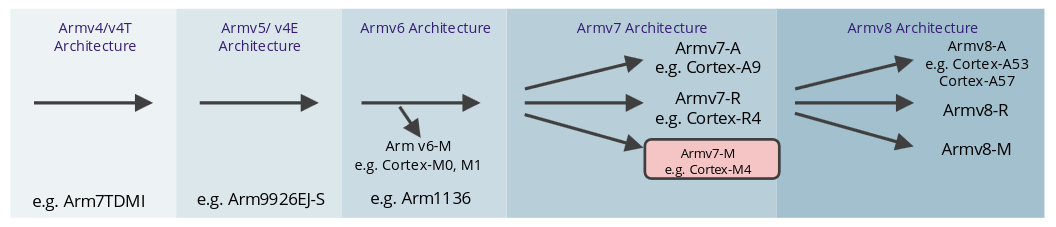
In this course we will learn about the ARM architecture, specifically we will use ARM Cortex M4 processor cores with various microcontrollers.
ARM is a family of RISC-based processor architectures well known for its power efficiency. ARM licenses the intellectual property of the architecture to other manufacturers, who physically produce the processors.
- Cortex A: high performance processors capable of supporting full operating systems;
- Cortex R: high performance for real time applications;
- Cortex M: cost sensitive and power efficient;
Von Neumann vs Harvard architectures
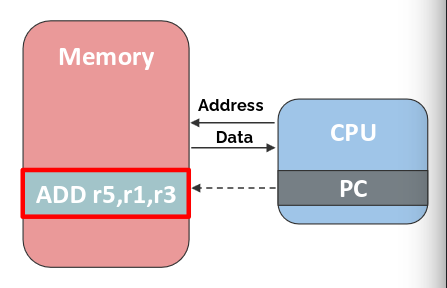
Section titled “Von Neumann vs Harvard architectures”In the Von Neumann architecture memory holds both data and instructions. The CPU fetches the instruction from memory, decodes and then executes it.
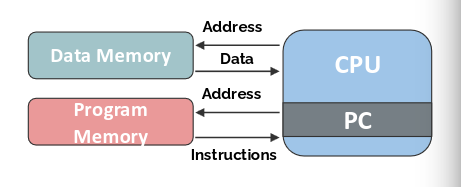
The Harvard architecture has separate memories for data and programs. The program counter points only to program memory, so self-modifying code cannot be used. The advantage is doubled memory bandwidth, since instruction and data accesses can use separate memory buses simultaneously.